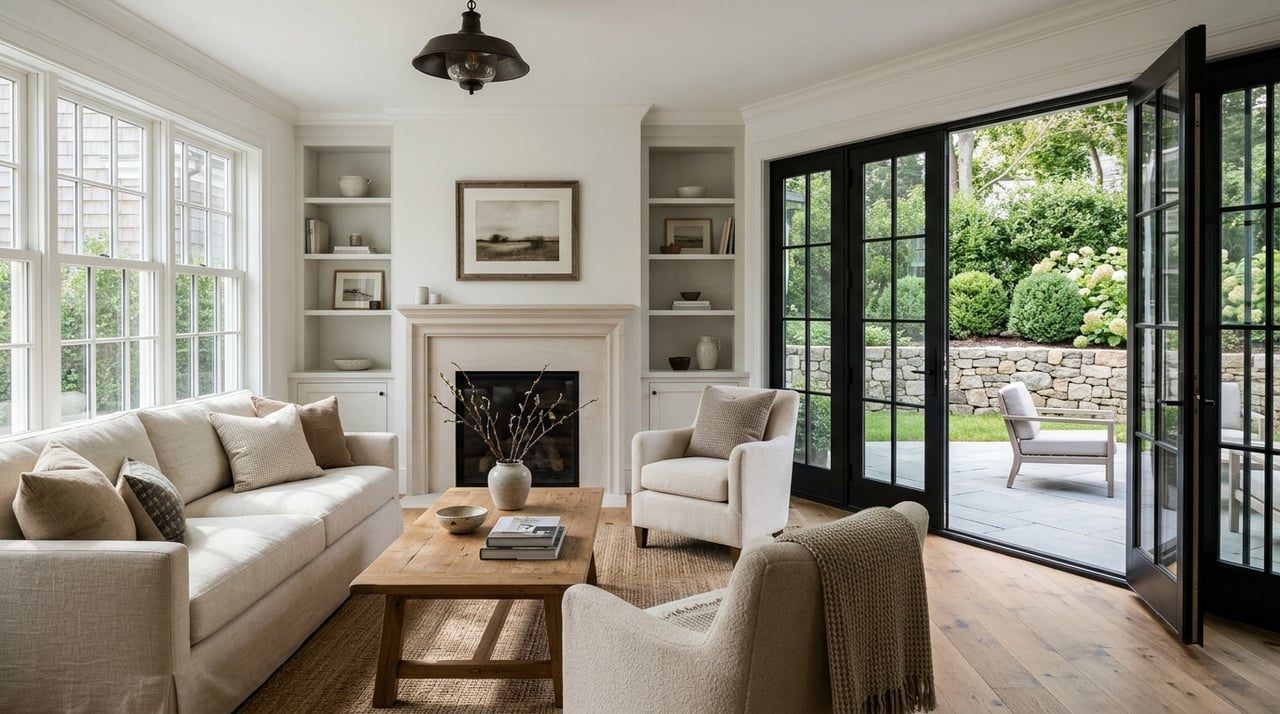
If you want buyers to feel the value of your home the moment they see it online, staging is not an extra. It is part of the strategy. In Ridgefield and Wilton, where many homes are higher-value, owner-occupied single-family properties, the way your home looks in photos, video, and showings can shape how quickly buyers connect with it. This guide walks you through the staging updates that tend to have the biggest impact first, so you can focus your time and budget where it matters most. Let’s dive in.
Why staging matters in Ridgefield and Wilton
In markets like Ridgefield and Wilton, buyers often expect a home to feel move-in ready, well cared for, and easy to picture themselves in. That matters even more because many buyers start their search online and narrow their list before they ever step inside a house.
According to the 2025 NAR Profile of Home Staging, 83% of buyer's agents said staging made it easier for buyers to visualize a property as their future home. The same report found that staging can also help reduce time on market, with 30% of agents saying it slightly decreased time on market and 19% saying it greatly decreased it.
Digital presentation is a major reason why. In the 2025 NAR Home Buyers and Sellers Generational Trends Report, 43% of buyers said they first looked online for properties, and 51% found the home they purchased on the internet. Among internet users, 83% said photos were the most useful listing feature, followed by detailed property information, floor plans, virtual tours, and video.
Start with the highest-return prep work
Before you think about throw pillows or decorative accents, focus on the basics that make a home look clean, bright, and well maintained. The same NAR staging report shows that the most common seller prep recommendations were decluttering, whole-home cleaning, and curb appeal improvements.
For most Ridgefield and Wilton sellers, the smartest order is simple:
- Declutter and depersonalize
- Deep clean the whole home
- Address minor repairs and paint touch-ups
- Improve curb appeal and outdoor presentation
- Stage the rooms buyers notice most
This approach usually delivers more value than trying to style every space at once. It also helps your home read better in listing photos and during private showings.
Focus on curb appeal first
Your front approach sets expectations before a buyer reaches the door. If the exterior feels neglected, buyers may assume the same about the inside.
The good news is that curb appeal improvements do not need to be complicated. The NAR staging report lists curb appeal and outdoor area work among the top pre-listing priorities, which makes this a smart place to spend time early.
Curb appeal priorities
- Trim shrubs and tidy planting beds
- Clean the front walk and entry
- Refresh the front door area
- Remove extra planters, tools, and seasonal clutter
- Make sure outdoor lighting is working
- Keep lawns neat and edges clean
In Ridgefield and Wilton, where many homes have mature landscaping, long driveways, patios, decks, or broad lawns, outdoor spaces can add to the sense of scale and lifestyle. A simple seating setup on a patio or deck can help buyers understand how the space lives.
Stage the living room first
If you can only fully stage a few rooms, start with the living room. In the 2025 NAR report, 37% of buyer's agents said it was the most important room to stage.
Your goal is to make the room feel open, bright, and easy to use. Buyers should understand the focal point right away, whether that is a fireplace, windows, or a conversation area.
Living room tips that make a difference
- Remove oversized or extra furniture
- Create clear walking paths
- Limit surface clutter
- Use a simple, balanced furniture layout
- Let in as much natural light as possible
In photos, crowded rooms often feel smaller than they are. A cleaner layout helps buyers judge scale more accurately and imagine their own furniture fitting comfortably.
Make the primary bedroom feel calm
The primary bedroom was the second most important room to stage in NAR's 2025 findings, with 34% of buyer's agents rating it very important. That tells you this space deserves focused attention.
The room should feel restful, not busy. Crisp bedding, limited furniture, and hidden personal items can make a major difference.
Primary bedroom staging tips
- Use neutral bedding with a clean, tailored look
- Clear dressers and nightstands
- Remove excess chairs, benches, or storage pieces
- Store personal photos and daily-use items out of sight
- Keep closets orderly if they may be shown
A calm bedroom helps buyers connect emotionally with the home. It also signals that the property has been thoughtfully prepared.
Simplify the kitchen
Kitchens remain one of the highest-priority spaces for buyers. In the 2025 NAR staging report, 23% of buyer's agents rated the kitchen as very important to stage.
You do not need to create a magazine set. You do need a kitchen that feels clean, functional, and easy to maintain.
Kitchen staging tips
- Clear countertops as much as possible
- Deep clean surfaces, appliances, and sinks
- Add simple seating if it helps define an island or breakfast area
- Make the dining area easy to identify
- Update lighting if bulbs are dim or mismatched
A few intentional details can help, but less is usually more. Buyers want to see workspace, storage, and flow.
Keep bathrooms spotless and simple
Bathrooms may not be the headline room, but buyers notice details there quickly. The research specifically calls out grouting, cleaning, and minor repairs, which shows how important finish-level upkeep can be.
This is one area where small issues can feel bigger than they are. Worn caulk, visible products, or dingy towels can distract from an otherwise strong listing.
Bathroom checklist
- Clean grout and tile thoroughly
- Store personal products out of sight
- Replace worn towels with fresh, simple textiles
- Fix dripping faucets or loose hardware
- Keep counters nearly clear
The result should feel fresh, not overstyled.
Give bonus spaces a clear purpose
Flex rooms can help your home stand out, but only if buyers understand how to use them. According to NAR's staging guidance, staging helps buyers visualize versatile spaces more clearly.
If you have a bonus room, office, den, or finished lower-level area, avoid leaving it vague. A defined setup helps buyers understand layout and function faster.
Smart ways to define flexible rooms
- Set up a home office with a desk and lamp
- Arrange a den as a reading or media room
- Use a bonus space as a homework or hobby area
- Keep furnishings scaled to the room size
Clarity matters more than decoration. Buyers should not have to guess what the room can do.
Do not over-invest in secondary bedrooms
If your budget is limited, do not spend heavily on rooms buyers rank lower. The 2025 NAR report notes that guest bedrooms were the least important room to stage.
That does not mean they should be ignored. It means they should be tidy, neutral, and proportional, rather than heavily styled.
A made bed, clean surfaces, and open floor area are usually enough. Save your strongest effort for the spaces that drive first impressions and listing performance.
Finish staging before photos and tours
One of the most common mistakes sellers make is doing staging work after photography is scheduled. By then, you may have already missed your best first impression.
According to the 2025 NAR buyer trends report, photos were the most useful website feature for 83% of internet-using buyers. Floor plans, virtual tours, and videos also played a meaningful role in how buyers evaluated homes online.
That means your staging should be complete before:
- Professional photography
- Floor plan creation
- Virtual tour capture
- Video production
- Your listing launch
For vacant homes, physical staging in the key rooms often builds more trust and a better sense of scale than relying only on digital enhancements. The 2025 staging report found that buyer's agents rated photos, traditional staging, videos, and virtual tours as more important than virtual staging.
A practical staging order for sellers
If you want a simple roadmap, use this sequence:
- Declutter every room
- Deep clean the home
- Handle touch-ups and minor repairs
- Improve the front entry and visible outdoor areas
- Stage the living room
- Stage the primary bedroom
- Stage the kitchen
- Refresh bathrooms
- Define flex spaces
- Tidy secondary bedrooms without overdoing them
This order lines up with what buyers notice, what agents recommend most often, and what tends to show best online.
Why strategic staging pays off
In a place like Ridgefield or Wilton, staging is less about decorating and more about presentation. You are helping buyers understand the space, feel its value, and imagine life there from the first photo through the final showing.
When your home is clean, edited, and thoughtfully prepared, your marketing works harder. If you are thinking about selling and want a tailored plan for what to update before you list, The Fair Team can help you prioritize the improvements that support a strong launch.
FAQs
What staging projects matter most for Ridgefield and Wilton sellers?
- The highest-impact priorities are usually decluttering, deep cleaning, curb appeal, and staging the living room, primary bedroom, and kitchen first.
Does home staging really help homes sell faster in Ridgefield and Wilton?
- According to NAR's 2025 staging report, 30% of agents said staging slightly decreased time on market and 19% said it greatly decreased time on market.
Which rooms should sellers stage first before listing a home?
- The living room should usually come first, followed by the primary bedroom and kitchen, since those ranked highest in importance in NAR's 2025 staging data.
Should sellers stage every bedroom in a Ridgefield or Wilton home?
- No. If your budget is limited, keep secondary bedrooms clean and neutral, but focus your main staging effort on the rooms buyers care about most.
When should staging be finished before a home goes on the market?
- Staging should be complete before photography, floor plans, virtual tours, video, and the listing launch so your online presentation is as strong as possible from day one.